
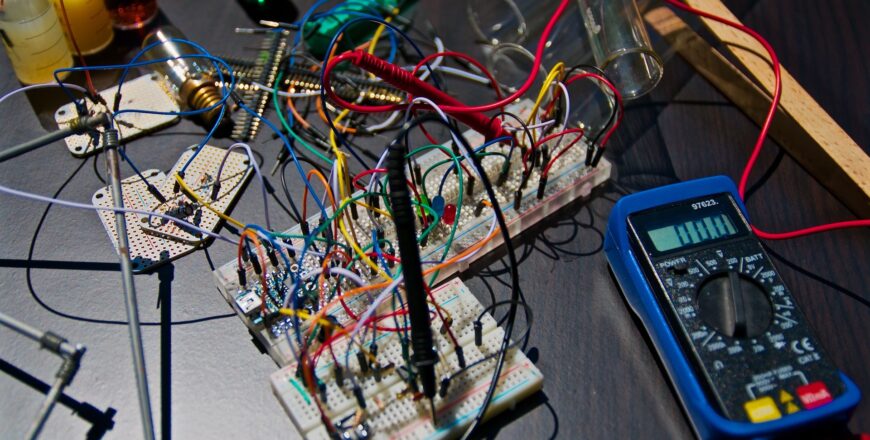
Programme Overview The City & Guilds Level 2 Diploma in Engineering - Electrical & Electronic Technology is designed to provide students with a comprehensive understanding of electrical and electronic engineering principles, practices, and technologies. This diploma program prepares students for entry-level roles in various sectors of the engineering industry, including manufacturing, construction, maintenance, and telecommunications. To achieve this Level 2 Diploma in Engineering - Electrical & Electronic Technology, learners must achieve 6 units with a total credit value of 42. Unit Breakdown: Unit 201 Working in engineering (Level 2, Credit value 7): covers basic skills and knowledge needed to function in engineering or manufacturing sectors, safe working practices, the environment, teamwork and communication methods. Outcomes: Know engineering health and safety requirements; Know effective methods of communication; Understand drawings and specifications; Know about working in engineering. Unit 202 Principles of engineering technology (Level 2, Credit value 7): basic principles of mathematics and science, materials technology, common applied engineering calculations and materials selection. Outcomes: Know requirements for materials in engineering; Know properties of engineering materials; Apply analytical methods to engineering mathematical applications; Apply analytical methods to engineering science applications. Unit 211 Maintaining electrical wiring support systems (Level 2, Credit value 7): installation/maintenance of electric wiring support systems including conduit, trunking and traywork systems. Outcomes: Plan and prepare for electrical wiring support systems; Install and repair electrical support systems; Commission the system. Unit 221 Principles of electrical and electronics technology (Level 2, Credit value 7): Electrical and Electronic Technology required for working with lighting, heating and power circuits. Outcomes: Know the basic units used in electrotechnology; Know the application of electrotechnology; Identify the characteristics of an electrical circuit. Unit 222 Maintaining electrical equipment and systems (Level 2, Credit value 7): process and equipment essential for the maintenance of electrical engineering equipment up to 400v. Outcomes: Prepare for maintaining electrical systems/equipment; Carry out the maintenance of electrical systems/equipment. Unit 223 Wiring and testing electrical circuits (Level 2, Credit value 7): process and equipment essential to the wiring and testing of electrical circuits connected to a 230/400v installation. Outcomes: Assemble components and prepare for wiring and testing of electrical circuits; Carry out the wiring of electrical circuits. Awarding body: City & Guilds.
POWER This unit introduces participants to the fundamentals of electrical power and machines. This course covers the theoretical concepts associated with power distribution systems, alternating current and direct current motors, both single phase and three phase, power generation along with other areas that aid with the generation, distribution and utilization of electrical power. LEARNING OUTCOMES: Upon completion of this course students will: 1. understand and perform basic and advanced calculations for electrical resistance and impedance 2. apply an understanding of the construction and different configurations of transformers to troubleshoot problems 3. able to apply an understanding of AC and DC machines to make recommendations and solve problems. 4. understand & apply concepts of power distribution to troubleshoot and make recommendations
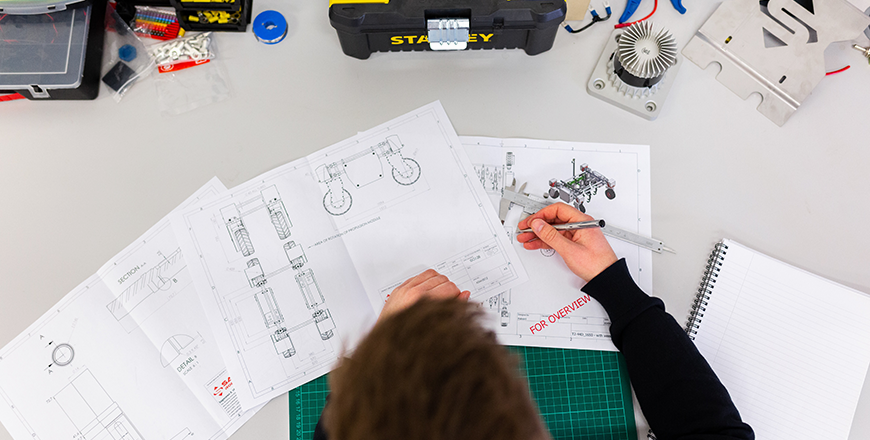
Engineering is a discipline that uses scientific theory to design, develop or maintain structures, machines, systems and processes. Engineers are therefore required to have a broad knowledge of the science that is applicable to the industry around them. Engineering Fundamentals involves the application of creative reasoning, science, mathematics and problem solving skills. In this course, you will learn how to use fundamental engineering knowledge to develop your scientific, communication and problem-solving skills utilizing the laws and applications of the physical sciences within engineering and applying this knowledge to find solutions to a variety of engineering problems. Among the topics included in this course are: the international system of units, data interpretation, static and dynamic forces, fluid mechanics and thermodynamics, material properties and failure, and D.C circuit theories. Upon completion of this course students will be able to: - Examine and analyze scientific data using computational methods. - Determine parameters within mechanical engineering systems. - Explore the characteristics and properties of engineering materials. - Analyze applications of electrical principles and properties

This course is intended as an introduction to understanding blueprints and being able to visualize and understand the intent of the designer as presented in a blueprint. The first step in providing quality of a product is interpreting the drawing correctly and applying the given information to the final product. This course is a guide to interpreting drawings commonly found in Engineering. It provides information for blueprint reading beginning with the background of blueprints, looking at the types of lines used on a drawing, and how parts are shown in different views. At the end of this course students will be able to: - Visualize three-dimensional objects while viewing two-dimensional drawings - Interpret the following engineering drawing applications: Line conventions; Standard drawing symbols; Section views; Screw thread representation; Dimensioning; Tolerancing; Machining specifications; Surface texture; Title block and parts list; Drawing notes; Drawing revision systems
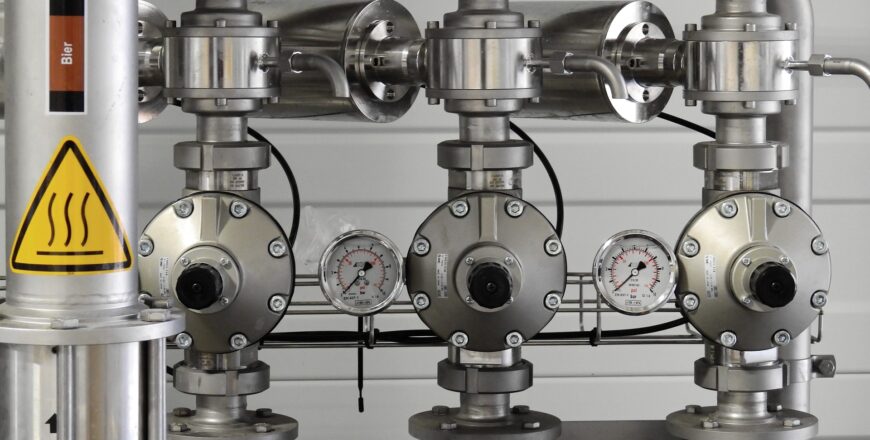
The course aims to introduce the students the function and role of process measurement and instrumentation in an industrial processes and manufacturing environment. At the end of this course students will be able to: - Understand the difference between Open-loop and closed-loop control systems - Describe Typical processes that measure pressure temperature, flow, and level. - Identify Sensing devices their uses in measuring pressure, level, flow and temperature. - Understand the function of Transmitters, receiving devices, controllers, valves and other process instruments - The basics of pressure measurement devices. - Identify the types of meters Manometers, bourdon tubes, diaphragms, capsules, bellows, and strain gauges. Principles of Level Measurement - Level measurements differentiate between low-pressure and high-pressure level measuring methods - Uses of capacitance, displacer, and reluctance probes in measurement and instrumentation. - Methods of level measurement such as infrared, radioactive, and ultrasonic systems will be discussed. Principles of Temperature Measurement - Thermocouples, RTDs, thermistors.
Programme Overview The City & Guilds Level 2 Certificate in Engineering - Electrical & Electronic Technology is designed to provide students with a comprehensive understanding of electrical and electronic engineering principles, practices, and technologies. This program prepares students for entry-level roles in various sectors of the engineering industry, including manufacturing, construction, maintenance, and telecommunications. To achieve this Level 2 Certificate in Engineering - Electrical & Electronic Technology, learners must successfully complete 5 units with a total credit value of 35. Unit Breakdown: Unit 201 Working in engineering (Level 2, Credit value 7): underpinning basic skills and knowledge needed to function in engineering or manufacturing sectors; safe working practices, the environment, teamwork, communication. Outcomes: Know engineering health and safety requirements; Know effective methods of communication; Understand drawings and specifications; Know about working in engineering. Unit 202 Principles of engineering technology (Level 2, Credit value 7): basic principles of mathematics and science, materials technology, applied engineering calculations and materials selection. Outcomes: Know requirements for materials in engineering; Know properties of engineering materials; Apply analytical methods to engineering mathematical applications; Apply analytical methods to engineering science applications. Unit 211 Maintaining electrical wiring support systems (Level 2, Credit value 7): installation/maintenance of electric wiring support systems including conduit, trunking and traywork systems. Outcomes: Plan and prepare for electrical wiring support systems; Install and repair electrical support systems; Commission the system. Unit 221 Principles of electrical and electronics technology (Level 2, Credit value 7): Electrical and Electronic Technology required for working with lighting, heating and power circuits. Outcomes: Know the basic units used in electrotechnology; Know the application of electrotechnology; Identify the characteristics of an electrical circuit. Unit 222 Maintaining electrical equipment and systems (Level 2, Credit value 7): maintenance of electrical engineering equipment up to 400v. Outcomes: Prepare for maintaining electrical systems/equipment; Carry out the maintenance of electrical systems/equipment. Awarding body: City & Guilds. Duration: 6 Months (2 Academic Semesters)

COURSE OVERVIEW This course introduces students to the study of workplace occupational health and safety. It highlights and teaches the importance of implementing safe work practices in the workplace and by extension in the home. Students will learn to identify hazards and prevent accidents and incidents by applying risk control measures. AIMS OF THE COURSE To provide students with: - An introduction to safety and health - An understanding of the requirements of Safety & Health Law and Regulations - The fundamentals for the development of a safety and health policy - The ability to identify workplace hazards and measures for controlling the risk level - An understanding of the risk assessment methodology - An introduction to Safe Systems of Work - An introduction to the basics of Accident Reporting and Investigations LEARNING OUTCOMES: Upon successful completion of this course, the student will have demonstrated the ability to: - Define safety and health terms and standards - Demonstrate a working knowledge of the Safety & Health Law and Regulations as it pertains to the workplace - Draft a safety & health policy including the three (3) main elements - Evaluate a workspace and identify the hazards and select appropriate control measures based on the hierarchy of controls - Apply the basic principles of a risk assessment - Identify the types of safe systems of work and their applications - Demonstrate knowledge of reporting requirements and accident causation factors

COURSE OVERVIEW: Electronic Engineering is the branch of science that deals with the study of the flow and control of electrons (electricity) in vacuum and matter. The flow of the electrons is controlled by utilizing various devices to resist, carry, select, steer, switch, store, manipulate and exploit the electron. These devices or components are called electronic devices and are used for rectification, generation, conversion, amplification and control of the electric current. This course is a foundation for entering careers and everyday participation in a culture grounded in electronics. As students engage in this course, they will learn the basic theories and principles that are fundamental to electronics through the development of practical and theoretical knowledge. The method for accomplishing this will include the application of the theory learnt in the course to build circuits in series and parallel on a breadboard and learning and applying practical skills such as soldering and reading a digital multimeter. Among the topics included in this course are: electrical and electronics safety, electrical component identification, introduction to voltage, current, resistance and schematic symbols, Ohm's law, Kirchhoff's laws, series and parallel circuits, measurement of key electronic parameters using a digital multimeter and bread-boarding. LEARNING OUTCOMES: Upon completion of this course students will be able to: - Understand basic atomic structure, components of the atom, their charges and how an electric current is developed as a result of these. - Identify the schematic symbols of several common electronic components and describe their functions; define terms used in electronics. - Name several electrical shock hazards, understand the practice of electrical safety via proper procedures and Personal Protective Equipment (PPE). - Discern between the various types of conductors and their conductivity; determine the size of conductor needed for an application. - Calculate voltage, current and resistance in series, parallel and series-parallel circuits. - Learn to use various electronics equipment including the digital multimeter, breadboard, soldering equipment. - Read and analyze electronic circuit diagrams. - Determine the expected resistance of a wire and estimate the change in resistance that occurs with changing wire characteristics. - Calculate the total capacitance of a circuit; calculate the time constant of a resistance-capacitance (RC) or resistance-inductors (RL) circuit; calculate the total inductance of a circuit. - Explain how inductors are constructed and describe how an inductor can regulate the flow of current in a DC circuit. - Describe how diodes and transistors work and how to determine if they're working properly; list uses for diodes and transistors in electronic systems.
"To ensure the safety of the public, the Government Electrical Inspectorate certifies that wiremen carrying out electrical installations are qualified and capable to perform such work. Licences are issued to wiremen as verification of their certification" To qualify for acceptance to write the Wireman's Licence Examination a candidate must meet the following requirements: - A minimum age requirement of 23 years old - 3 years relevant work experience - Possess a Diploma in Electrical Installation from a recognised awarding body (NEC, City & Guilds, EduQual) - A degree in Electrical & Electronic Engineering/Technology. - Two (2) letters of recommendation from a Licenced Wireman or current and previous employers. Note: The application for the Wireman's Licence exam is done at the Electrical Inspectorate Service of Trinidad and Tobago not at SPA. At the end of this course students will be able to: - Understand the required standards for Electrical Installations as identified by the following regulatory bodies: Trinidad & Tobago Bureau of Standards - Electrical Wiring Code Part 1 Low Voltage Installation; Trinidad and Tobago Electricity Commission - Wiring for Lighting and Power. - Perform calculations to determine cable sizing, transformer sizing, Power Factor, Phase angle, Impedance and voltage drop. - Identify the requirements of load details and panel scheduling. - Understand requirements for earthing and standards for earthing. Awarding body - About London International College: London International College is a not-for-profit, independent sector college of higher education. Founded in 1974, it is one of the longest-established private colleges in London.