

Course Details: This course will enable participants to have advance knowledge of Electrical Installation. Topics include Illumination; Protection; Transformers; Generators; Turbines; Testing; Uninterruptible Power Supply and Regulations. Practical will include Switching, Trouble Shooting, and Termination. Upon completion, participants should have a better understanding of electrical concepts and should be able to apply relevant regulation to their project. Upon completion of this course students will: a) Understand various types of lighting and their applications. b) Understand the codes and standards related to commercial wiring. c) Understand various types of power generating apparatus. d) Understand how to trouble shoot and solve electrical problem. e) Be able to break a switch leg and make various connections. f) Be able to use material and equipment in electrical installations. Duration: 12 Weeks | Lectures: 14 | Quizzes: 1 | Level: Intermediate
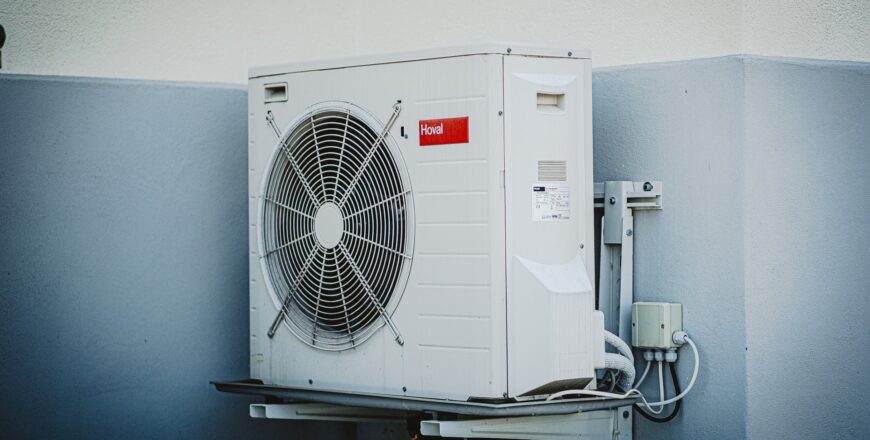
Course Overview This Air Conditioning & Refrigeration Course teaches the skills required to diagnose, maintain, and repair residential air conditioning and an introduction to commercial air conditioning and refrigeration equipment. At the end of this course students will be able to: - Understand the operation of Air Conditioning & Refrigeration Systems - Identify and describe the function of the major components of Air Condition and Refrigeration Systems - Determine refrigerant properties and characteristics as well the safe handling of refrigerants and cylinders - Understand the purpose and use of tools associated with the installation and maintenance of Air Condition & Refrigeration Systems.

Course Overview: This course will introduce the basics of CCTV system, how it works and types of CCTV system. In this course, you will also learn about the CCTV camera features which plays a very crucial role in recording a good quality video and make optimum use of the available resources. The complete CCTV installation course offers a superb blend of 'need to know' classroom theory and 'hands on' practical experience. You will gain the necessary knowledge and skills to work effectively in the electronic security and video surveillance sector will be explored. From cabling to the latest HD analogue and IP integration techniques. - Understand what CCTV system is and how it works. - Identify the different types of CCTV system and CCTV components. - How to use different tools and software's related to IP CCTV system. - IP CCTV basics and skills related to IP CCTV systems. London International College Certified. About London International College: London International College is a not-for-profit, independent sector college of higher education. Founded in 1974, it is one of the longest-established private colleges in London. London International College has graduated thousands of students, who have gone on to successful careers in exciting areas such as IT companies, the financial sector, marketing and further education.

COURSE OVERVIEW The widespread ownership and use of mobile phones has created a need for professionals who can repair and service mobile phones. This course has been developed to address that need. The course targets people who would like to start and run a mobile repair and servicing business. By the end of this course, you should be able to disassemble and assemble a mobile phone, diagnose the problem, service and repair a mobile phone with the help of proper tools and instruments. This course is provided through distance learning, and we trust that you will find the material useful both for studying and as future reference. Learning Outcomes Upon completion of this course you will be able to: - Identify different types of mobile cell phones - Recognise potential hazards in the repair of mobile cell phones - Identify the parts of a mobile cell phone - Use the correct hardware tools to repair mobile cell phones - Assembly and disassembly a mobile cell phone - Identify mobile cell phone faults and solve them.
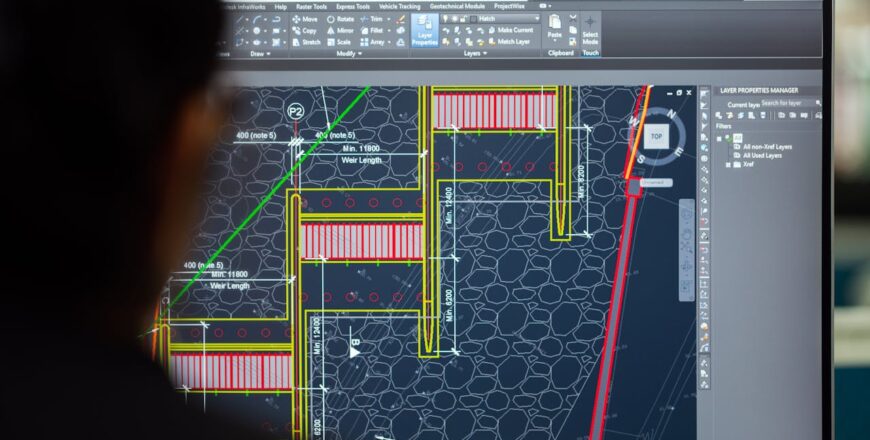
COURSE OVERVIEW: Introduction to Architectural Design is the study of the fundamental principles, processes, and visual language used in the creation of the built environment. It explores how architects conceptualize and shape space, form, and function while responding to human needs, environmental conditions, and cultural context. Architecture combines creative design thinking with technical understanding to produce spaces that are functional, meaningful, and sustainable. This course introduces learners to the core ideas and methods of architectural design, providing a foundation for understanding how buildings and spaces are conceived and developed. As learners engage in this course, they will develop design awareness, creative thinking, and visual communication skills essential to architectural practice. Emphasis is placed on understanding spatial organization, basic design principles, and the role of sustainability in contemporary design. The method for accomplishing this includes online lectures, visual case studies, and applied design exercises that encourage exploration and experimentation. Learners will be introduced to basic drawing and representation techniques, conceptual design methods, and analytical approaches to understanding space and user needs. This course establishes a foundation for further studies in architecture, construction, interior design, and other disciplines within the built environment. Among the topics included in this course are: the role of architecture and the design process, architectural terminology, form and space, scale and proportion, spatial organization, basic drawing and diagramming techniques, interpretation of architectural drawings, functional and user-based design, site and climate considerations, and introductory environmental and sustainable design concepts. LEARNING OUTCOMES: Upon completion of this course learners will be able to: - Describe key architectural concepts, terminology, and the architectural design process. - Explain the role of architecture within social, cultural, and environmental contexts. - Apply basic design principles such as form, space, balance, scale, and proportion. - Interpret and produce simple architectural drawings, diagrams, and visual representations. - Analyze relationships between function, users, and spatial organization in basic design problems. - Evaluate the influence of site conditions, climate, and sustainability on architectural design. - Communicate conceptual design ideas clearly using appropriate visual and written methods.
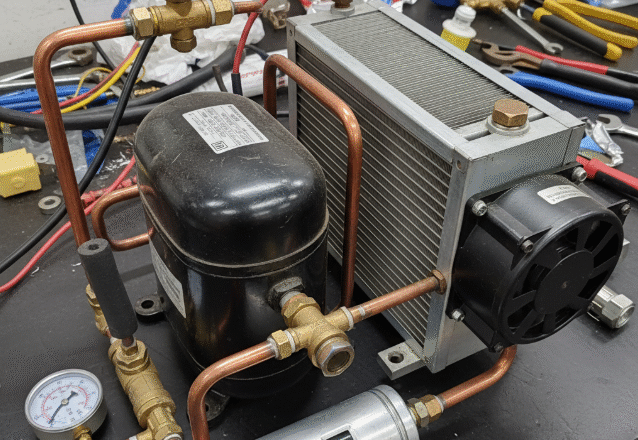
COURSE OVERVIEW: Refrigeration Repairs is a technical field concerned with the operation, maintenance, and repair of refrigeration systems used in domestic and light commercial applications. These systems function by removing heat from an enclosed space through a controlled refrigeration cycle, allowing food, medicine, and other temperature-sensitive items to be preserved safely and efficiently. The Certificate in Refrigeration Repairs provides learners with a foundational understanding of refrigeration principles, system components, and basic repair practices. Delivered fully online, the course focuses on how refrigeration systems operate, the tools and safety procedures required for servicing, and the identification and diagnosis of common faults. Emphasis is placed on understanding system functionality, applying safe working practices, and using logical troubleshooting techniques to address common refrigeration problems. As learners progress through the course, they will develop knowledge of the refrigeration cycle, major system components, and the interaction between electrical and mechanical elements within a system. The course also introduces routine maintenance procedures designed to improve system efficiency, reliability, and service life. This programme is ideal for individuals seeking entry-level knowledge in refrigeration repairs or those wishing to enhance their understanding of domestic and light commercial refrigeration systems. Among the topics included in this course are: basic refrigeration principles, refrigeration system operation, component identification, tools and equipment used in refrigeration repairs, safety practices, common system faults, troubleshooting techniques, basic electrical and mechanical faults, and routine maintenance procedures. LEARNING OUTCOMES: Upon completion of this course students will be able to: - Explain the basic principles of refrigeration and describe how refrigeration systems operate. - Identify major refrigeration system components and explain their functions within the refrigeration cycle. - Apply appropriate safety procedures and demonstrate proper use of tools and equipment used in refrigeration repairs. - Diagnose common domestic and light commercial refrigeration faults using logical and systematic troubleshooting methods. - Explain basic electrical and mechanical faults commonly found in refrigeration systems. - Describe routine maintenance practices that improve refrigeration system efficiency, performance, and lifespan.
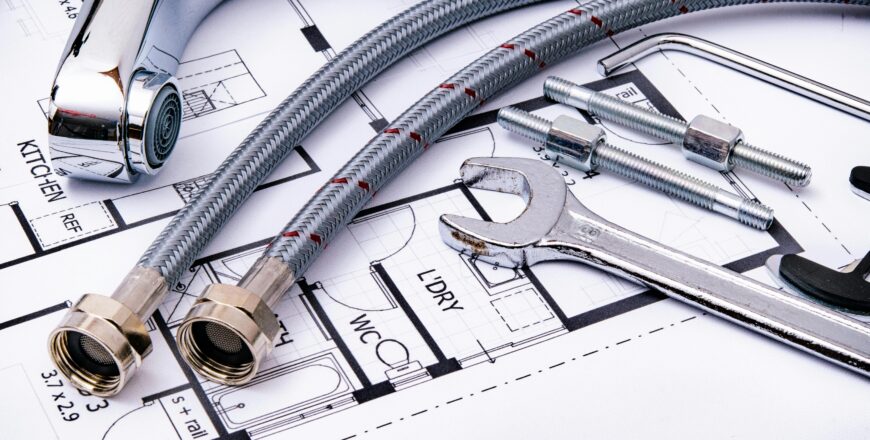
COURSE OVERVIEW: Plumbing is the skilled trade concerned with the installation, maintenance, and repair of systems used for the distribution of potable water, the removal of wastewater, and the provision of heating and sanitation in residential, commercial, and industrial buildings. These systems rely on a combination of pipes, fittings, valves, fixtures, and appliances that work together to safely deliver water and remove waste in accordance with established standards and codes. This course provides a foundational introduction to the principles and practices of plumbing, preparing students for entry-level work in the plumbing industry and for informed participation in environments that depend on modern plumbing systems. Through a combination of theoretical instruction and practical activities, students will develop an understanding of plumbing tools, materials, symbols, and system components. Emphasis is placed on safety, correct identification of components, accurate measurement, and proper installation techniques. Students will engage in hands-on learning experiences that involve working with common plumbing materials such as PVC, CPVC, PEX, and copper, as well as installing basic fixtures, faucets, and water supply and drainage systems. The course also introduces students to water heating systems and simple septic systems, enabling them to understand how these systems operate and how their components interact. Among the topics included in this course are: plumbing safety practices, identification and use of plumbing tools, measurement techniques, plumbing symbols and abbreviations used in architectural drawings, pipe and fitting identification, valves and meters, water heating systems, fixture installation procedures, drainage and venting systems (DWV), and the basic operation of a septic system. LEARNING OUTCOMES: Upon completion of this course students will be able to: - Demonstrate general safety practices related to plumbing, including the use of proper procedures and Personal Protective Equipment (PPE). - Recognize and correctly name common tools used in the plumbing trade and describe their functions. - Accurately use a measuring tape to take measurements required for plumbing installations. - Identify plumbing symbols and abbreviations commonly used in architectural and plumbing drawings. - Identify various types of plumbing fixtures and describe their applications. - Recognize and properly name different types of pipes and fittings used in plumbing systems. - Identify and describe the function of common valves and meters used in water supply systems. - Describe how the controls and heating elements of water heating systems operate. - Explain and apply techniques for working with pipes and fittings made from PVC, CPVC, PEX, and copper. - Describe proper installation procedures for fixtures, faucets, water supply lines, and DWV connections for different fixtures and appliances. - Explain the basic operation of a simple septic system and identify its main components.

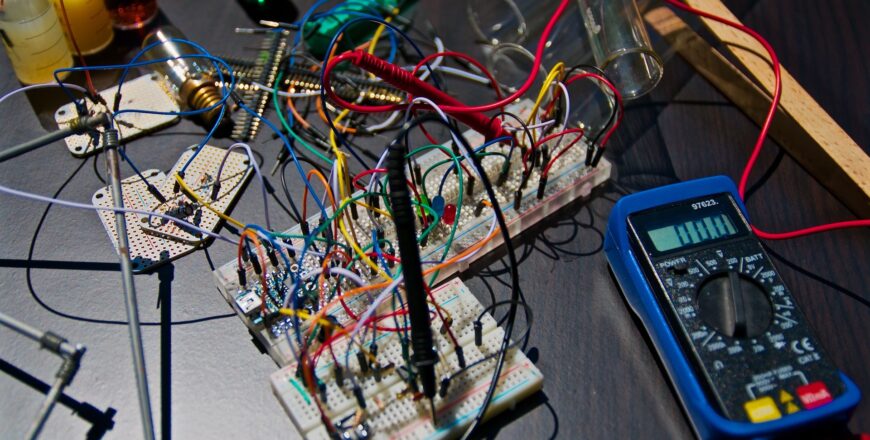
COURSE OVERVIEW: Electronic Engineering is the branch of science that deals with the study of the flow and control of electrons (electricity) in vacuum and matter. The flow of the electrons is controlled by utilizing various devices to resist, carry, select, steer, switch, store, manipulate and exploit the electron. These devices or components are called electronic devices and are used for rectification, generation, conversion, amplification and control of the electric current. This course is a foundation for entering careers and everyday participation in a culture grounded in electronics. As students engage in this course, they will learn the basic theories and principles that are fundamental to electronics through the development of practical and theoretical knowledge. The method for accomplishing this will include the application of the theory learnt in the course to build circuits in series and parallel on a breadboard and learning and applying practical skills such as soldering and reading a digital multimeter. Among the topics included in this course are: electrical and electronics safety, electrical component identification, introduction to voltage, current, resistance and schematic symbols, Ohm's law, Kirchhoff's laws, series and parallel circuits, measurement of key electronic parameters using a digital multimeter and bread-boarding. LEARNING OUTCOMES: Upon completion of this course students will be able to: - Understand basic atomic structure, components of the atom, their charges and how an electric current is developed as a result of these. - Identify the schematic symbols of several common electronic components and describe their functions; define terms used in electronics. - Name several electrical shock hazards, understand the practice of electrical safety via proper procedures and Personal Protective Equipment (PPE). - Discern between the various types of conductors and their conductivity; determine the size of conductor needed for an application. - Calculate voltage, current and resistance in series, parallel and series-parallel circuits. - Learn to use various electronics equipment including the digital multimeter, breadboard, soldering equipment. - Read and analyze electronic circuit diagrams. - Determine the expected resistance of a wire and estimate the change in resistance that occurs with changing wire characteristics. - Calculate the total capacitance of a circuit; calculate the time constant of a resistance-capacitance (RC) or resistance-inductors (RL) circuit; calculate the total inductance of a circuit. - Explain how inductors are constructed and describe how an inductor can regulate the flow of current in a DC circuit. - Describe how diodes and transistors work and how to determine if they're working properly; list uses for diodes and transistors in electronic systems.

COURSE OVERVIEW This course introduces participants to the fundamentals of electrical installation. Topics include electrical safety, electrical print reading, planning, layout and installation of electrical distribution equipment; lighting; overcurrent protection, conductors, branch circuits and conduits. Upon completion, students should be able to properly install conduits, wiring and electrical distribution equipment associated with residential electrical installations. Electrical Installation is a fundamental trade that involves the safe and correct installation of electrical wiring systems, conduits, and distribution equipment used in residential (domestic) buildings. These systems are designed to deliver electrical power efficiently and safely to lighting points, socket outlets, switches, and appliances in accordance with established electrical standards and safety regulations. This course provides a solid foundation for individuals seeking entry-level skills in residential electrical installation or for those wishing to develop a practical understanding of domestic electrical systems. Through a balance of theoretical instruction and hands-on practical activities, students will learn the principles, techniques, and safety practices required to carry out basic electrical installation tasks correctly and safely. Among the topics included in this course are: electrical safety practices, tools and materials used in electrical installations, types of wiring systems, conduit bending and installation techniques, electrical connections, wiring of lighting and socket outlet circuits, installation of basic electrical distribution equipment, and reading and interpreting electrical plans. LEARNING OUTCOMES: Upon completion of this course students will be able to: - Demonstrate safe working practices related to electrical installation, including the correct use of tools, equipment, and Personal Protective Equipment (PPE). - Identify and correctly name common tools, materials, and equipment used in residential electrical installations and describe their functions. - Install electrical conduits using proper measuring, cutting, bending, and fixing techniques. - Make safe and secure electrical connections in accordance with accepted installation practices. - Wire basic electrical circuits, including lighting circuits and socket outlets, used in domestic installations. - Install and connect basic electrical distribution equipment associated with residential electrical systems. - Read and interpret electrical plans and drawings used in domestic electrical installations. - Apply proper workmanship standards to ensure neat, safe, and reliable electrical installations.
"To ensure the safety of the public, the Government Electrical Inspectorate certifies that wiremen carrying out electrical installations are qualified and capable to perform such work. Licences are issued to wiremen as verification of their certification" To qualify for acceptance to write the Wireman's Licence Examination a candidate must meet the following requirements: - A minimum age requirement of 23 years old - 3 years relevant work experience - Possess a Diploma in Electrical Installation from a recognised awarding body (NEC, City & Guilds, EduQual) - A degree in Electrical & Electronic Engineering/Technology. - Two (2) letters of recommendation from a Licenced Wireman or current and previous employers. Note: The application for the Wireman's Licence exam is done at the Electrical Inspectorate Service of Trinidad and Tobago not at SPA. At the end of this course students will be able to: - Understand the required standards for Electrical Installations as identified by the following regulatory bodies: Trinidad & Tobago Bureau of Standards - Electrical Wiring Code Part 1 Low Voltage Installation; Trinidad and Tobago Electricity Commission - Wiring for Lighting and Power. - Perform calculations to determine cable sizing, transformer sizing, Power Factor, Phase angle, Impedance and voltage drop. - Identify the requirements of load details and panel scheduling. - Understand requirements for earthing and standards for earthing. Awarding body - About London International College: London International College is a not-for-profit, independent sector college of higher education. Founded in 1974, it is one of the longest-established private colleges in London.